Archive | Uncategorized RSS feed for this section

Sometimes good things happen!

7 Jan

This morning I received this message from a colleague at Sutcliffe Play and I thought it was such a nice message, so simple and reassuring that we do sometimes get things right, so I thought I would share it!

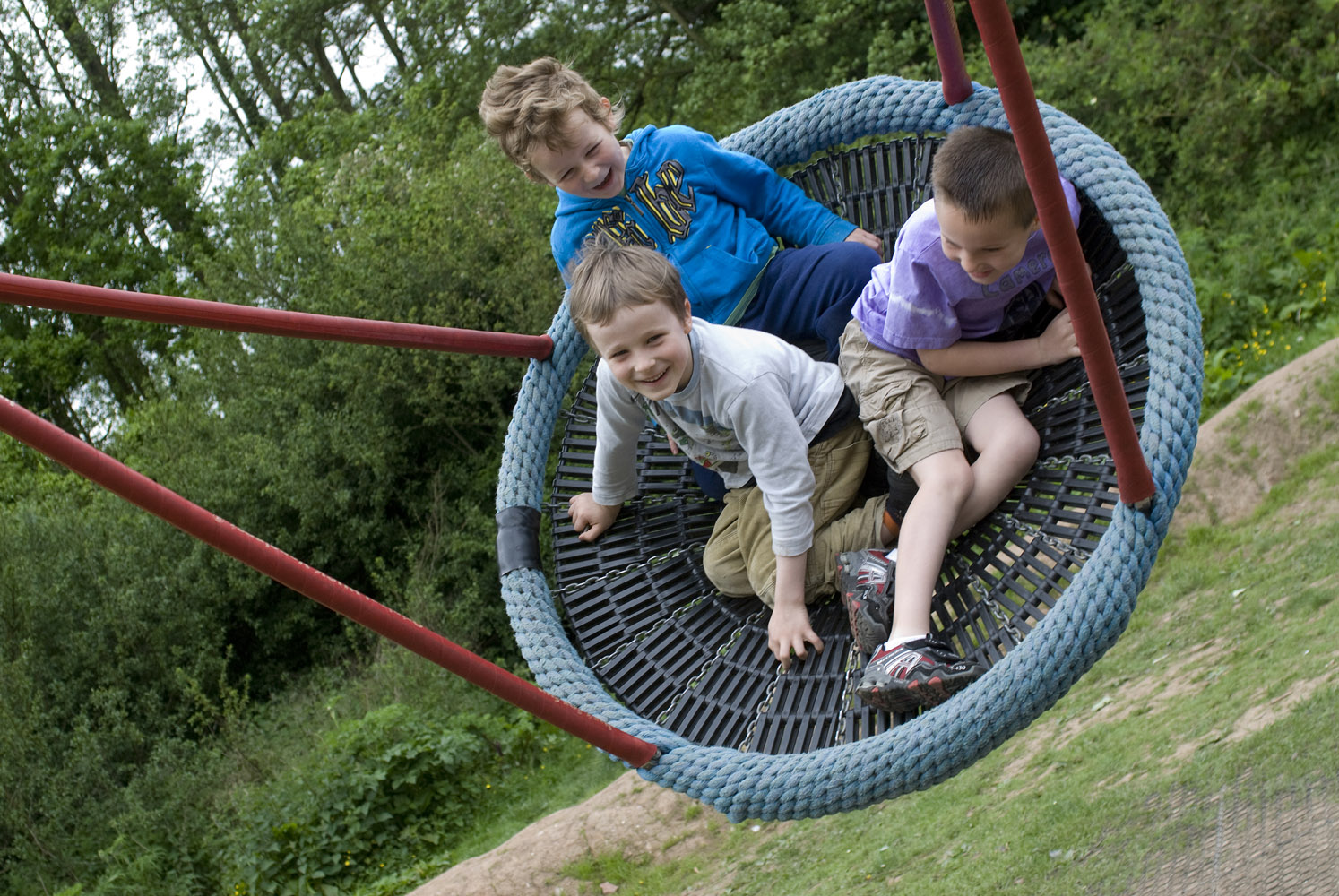
Basket swing at Dorridge Park Solihull 2

We have had some very heart-warming feedback from one of the recent installations in Kevin’s area that we would like to share.

At a new play area, The Donna Louise Children’s Hospice, one of the children was using  the basket swing with his sister, he was moving his arms in a way he very rarely does and generally having a great time. The child’s mum was so overwhelmed at his response, and at seeing the children all playing together, it had brought her to tears.

Through all aspects of our business here, this shows the impact of how what we do has a huge impact on the people who eventually use our play equipment. It gives many users the opportunity to experience new sensations that may be difficult for them to do day to day and have fun along the way.

Great work by everyone involved. Well Done.

This is not the first time this has happened to me either. I remember watching a child in a school for severely disabled children uncurl from a tight ball, like a bud unfolding, when he first experienced a soft play area. The staff had never seen the child do anything other than rock back and forth before.

And another on our first inclusive playground in Romsey when the mother of a paraplegic child watched the child playing in a dish with their sibling, she choked up saying she had never seen her two children playing together in a playground.

Sometimes I think we are apt to see only the problems and frustrations of ignorance and powerlessness in our sector, but it is experiences like these that make it all worthwhile!

Have an exciting new year, its going to be a roller coaster!


Illumination

26 Nov

I always enjoy Holly’s garden blogs, Just few enough to be read religiously!

gardenbirdblog's avatargardenbirdblog

Acers just beginning to turn leaf at Westonbirt Arboretum, October 2014 Acers just beginning to turn leaf at Westonbirt Arboretum, October 2014

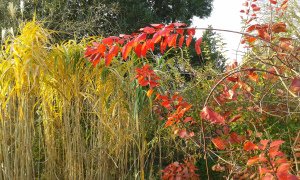
A tree turning leaf from verdant green to fiery vibrancy is like nature’s lightbulb moment – a flash of brilliance before winter sets in. The riotous conclusion, hidden since budbreak, appears from almost nowhere. Mother nature throws up her showgirl-skirt ruffles with abandon; flashes us her rainbow knickerbockers and chucks on her gaudiest baubles.

Cotinus coggygria Cotinus coggygria at Waterperry Gardens, November 2014

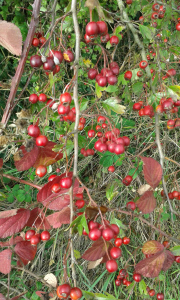
Plain old Crataegus monogyna (Hawthorn) and Rubus fruticosus (Blackberry) Plain old Crataegus monogyna (Hawthorn) and Rubus fruticosus (Blackberry) in a local hedgerow, Bedfordshire

This sudden flash of brilliance soon gives way to the sedate evergreens and minimal silhouettes of winter. November is a month when glow, hue and luminescence are at the forefront of the imagination; the absence of summer colours and sunny brightness gives way to the brazen blaze of senescent fire you find in autumn colours, the reds, oranges, yellows and pinks which light up…

View original post 776 more words

Should we be debating the Accident Compensation Commission process? When Bernard Spiegal found out that I was going to be in New Zealand (NZ),

26 Mar


When Bernard Spiegal found out that I was going to be in New Zealand (NZ), he asked me if I could find out about attitudes to risk in NZ Primary Schools, so my daughter, Lizzy, arranged a meeting with Nat Halliday. Clearly this can hardly be considered as a representative sample, but hopefully better than none and it was confirmed by two Local Authority Officers with responsibility for play and opens paces and two suppliers to parks and schools!


Lizzy introduced me to Nat Halliday, a friend of hers living in Lyttelton who is a Primary School Teacher at Diamond Harbour Primary School. Prior to teaching in NZ, Nat was a teacher in a UK Private school for young children.


Just to give a little background, Diamond Harbour is a small rural community on the shore of Lyttelton Harbour that also acts as a middle class suburb to Christchurch. The school has 130 pupils in 6 classes and has a catchment that includes remote farms on the Banks Peninsular.


Interestingly, the performance of schools in NZ is measured rather differently than how we measure performance here. They are measured on what Nat referred to as a Decile rating, based on the mean wealth of the pupil’s parents. As I understood it this means that the performance of schools in the lowest decile is not expected to achieve the same level of results as those in the upper deciles.


With the present Conservative government in NZ academic standards similar to those now being imposed in the UK are being adopted. Previously there had been far greater freedom both in curriculum and teaching methods. For example several approaches are offered in maths for solving simple arithmetical problems and children are allowed to adopt the approach with which they are most comfortable. So there is little imposed methodology. In addition great importance is attached to nature and particularly to indigenous and native plants and animals.


Set against this and again similar to the UK there has been a real awareness and move away from risk aversion to an enthusiasm for increased exposure to risk in forms that children can both identify and manage. The example that Nat gave was that children once again are being allowed, even encouraged, to climb trees. The process of risk assessment is only used for school trips outside the school premises and not, for example to trees within the grounds, where children would be expected to use their common sense. Nat himself suggests to children that if they are making a decision about the safety of a tree then working on the principle that a branch needs to be the same thickness as their leg is a sensible place to begin!


However there is a big difference in NZ to the UK and that is the New Zealand Accident Compensation Commission (ACC) www.acc.co.nz The law underpinning ACC was enacted during the tenure of Norman Kirk NZ Prime Minister in 1974, and is fundamental to the way risk is managed. It guarantees free medical assistance and treatment and 80% of pay lost due to the accident. Payment is conditional on agreement not to sue or litigate. This has resulted in a no claims culture across all the sectors that I met. These included Busy Cs preschool care where my Grandson, Alby, is cared for, Local Authority Parks, where I received four independent confirmations of the effectiveness of ACC and finally in the Primary School Sector from Nat. He confirmed that there is a no blame culture, suing simply does not happen.


So my conclusion is that if we are serious about increasing the momentum against a claims culture and a blame culture, we ought to give real consideration to research into the ACC approach. We need to assess the relative costs to Society of the two systems, both financially and in terms of children’s well being. We would also have to anticipate the resistance of all the vested, financial and professional institutions that would stand to lose from such a move. I wonder if this might not be the next direction the PSF ought to lobby for?


So perhaps I should finish with an anecdote that Nat told me during our conversation to exemplify the attitude to risk that is typical of NZ. In Little River, a small strung-out community on the road between Christchurch and Akorea on the Banks Peninsular, there is a twenty meter long water slide to which kids come from miles around (as well as the excellent coffee, café and art gallery). Not very long ago the slide broke and a kid came off and broke and arm, they were taken to hospital, the owner mended the slide, no one was sued, the slide was reopened for kids and life simply carried on.


Shouldn’t this be our aspiration for Britain? After all NZ was the first country in the world to grant universal franchise to women, maybe they could also be the first Country to lead the way on resolving the compensation culture.

I have to confess to a profound sadness on reading Bernard Spiegal’s Blog ( Holding fast: It’s not the evidence that does it ), as I feel it is the antithesis

10 Mar

I have to confess to a profound sadness on reading Bernard Spiegal’s Blog   Holding fast: It’s not the evidence that does it as I feel it is the antithesis of my approach to life. I believe that progress is the result of positive engagement and debate and that Government, whether you like it or not, wields the power and the purse strings. Not to engage (which is what I read his blog to infer), seems to me to achieve little other than to retain one’s own moral high ground. I also believe that the two rounds of funding from the last Government were achieved through some intensive engagement and although the outcome was far from perfect, it did significantly benefit children.

My own view is that we have a responsibility as adults to engage, risk, even welcome, compromise in order to make marginal and slow progress. We have to accept that under our own form of imperfect democracy we will experience setbacks. We must not be put off by these but pick ourselves up and re-enter the debate, re-motivated and even more determined. I sincerely hope that that is what I, the Children’s Play Policy Forum and Play England are doing. I make no apologies for it, although I do sympathise with those whose anger and frustration make this a near impossibility.

Evidence for play

25 Jan

I am writing this in support of Tim Gill’s blog

http://rethinkingchildhood.com/2014/01/20/help-build-policy-case-play/

asking for help to enable him to respond to the request from Nick Hurd for evidence in support of play.

I believe this is the first time that this Government has directly asked for engagement with the play sector at this level, which must make it one of the most important opportunities we have had to promote the interests of children in play. Consequently I am simply asking all the people who have an interest in this field to support Tim with time and thought. It may be a long time before we have another opportunity like this, so please help!

Robin Sutcliffe, Chair, Children’s Play Policy Forum

the rationale for regional play associations

3 Jan

There must be many small organisations in the voluntary sector that are facing issues of continuity and rationale for existence in this harsh economic climate. At the last meeting of Yorkshire Play (YP) I offered to remind my colleagues about the reasons why it was formed and subsequently it has occurred to me that this might have relevance to others who are in a similar position.

Yorkshire Play was actually made up from three separate strands. The Yorkshire Play Policy Forum, the Yorkshire Officers Group and the Regional office of SkillsActive. Clearly the Regional function of SkillsActive has been wound up and the Yorkshire Play Officers Group continues to meet separately as well as being represented in YP.

It is in this situation that YP, with no external funding, is looking at the rationale for continuation and I thought that the way in which the original forum came together might be of some relevance.

Back in the heady days of the early naughties, when Chris Smith had made his commitment of £200,000,000 for play, Tim Gill and Frank Dobson were asked , by the then Government to put together a funding strategy for NOF (now BLF of course). As part of that process he initiated a number of Regional consultations, excellently facilitated by Issy Cole-Hamilton, to obtain the views of the sector at a regional level.

One such consultation took place at Eureka, the National Children’s Museum in Halifax. At that time the zeitgeist of play policies was spreading across the land and a number of Play Officers in Local Authorities across Yorkshire were trying to embed policies within their own Authority.

It was a lonely endeavour in what felt like uncharted waters, so, not surprisingly, a number of officers came together at Eureka and identified a need to consult and support each other. They agreed to meet again and discuss their own particular progress, successes and problems, to share experience in order to help each other. This lead to the growth and expansion to include SkillsActive and the Yorkshire Play Officers Group, who continue to form an important part of the conversation along with the Commercial Sector.

I believe that the creation of the YPPF and the support and sharing of information did more to help develop policy in a non-coercive and sustainable way in Yorkshire than any other and that this need remains today. I agree that the situation is completely different;  I feel that today, play is polarised and isolated, even almost under siege. I do not believe that play policy, although important, should any more be the central plank of our campaign. I think that we could lower the bar and simply try to engage with Government and the Officers who work for Government. In doing this the role of Regional Associations and Play England should remain pivotal.

Howard League story about Wakefield Prison

9 Nov

The Howard League for Penal reform are currently seeking stories from people who have experience of the legal system and this story came to mind. After writing it I realised that perhaps there was a wider audience to whom it might appeal! So here it is.


I was involved in helping to set up the Children’s Play facility for visitors to Wakefield High Security Prison. The inspiration behind this was Barbara Tamminen who was a Play Worker trained at Leeds Metropolitan University. She had used her work at Wakefield as part of her quite ground breaking dissertation.


My story is about what the unit did for a young girl coming up to her GCSEs. Along with the children of drug addicts, children of prisoners are quite possibly one of the most discriminated against in our society, often treated as guilty on their parent’s account, even at the schools that they attend. This particular girl was a regular at the Unit, outgoing, contributing and supporting younger members of the play facility.


One day she came to the Unit and sat without speaking to anyone, clearly troubled and upset. Barbara approached her to find out what was wrong and she confessed that she was coming up to taking her GCSEs and was desperately anxious about her English. Her teachers had refused to help her and her parents were unable to and she didn’t know what to do. Barbara took her on one side and spent the whole of that session with her teaching her about how to take exams and how to do better with her English. A few months later we heard that she had passed.


I found this incredibly moving, where else had she to go? it has made me passionate about the importance of these facilities in Prisons and I am always grateful when I read of the work that the Howard League do to help these children. It can never be enough!

No wonder we are concerned for children and Nature

3 Nov

So I don’t blog for months, then two come along in four days!! Well I just felt that they were terribly important and had to blog them! so here goes . . . . . . . . .

I expect you will all know about Sara Maitland’s interest in the natural world? Well I didn’t until my wife started quoting from her recent book entitled ‘Gossip from the Forest’ and she read me one fact that I just thought I MUST make all my colleagues aware of this fact. It is as follows:

 “In 2008, a new edition of the Oxford Junior Dictionary- designed for children aged between 7 and 9- decided that the modern English primary school child had no use for a remarkable range of fairly basic ‘nature words’, including:

  • catkin;
  • brook;
  • acorn;
  • buttercup;
  • blackberry;
  • conker;
  • holly;
  • ivy;
  • mistletoe;”

 she then goes onto give us their replacements:

 “Of course the words that have replaced them – like database, export, curriculum, vandalism, negotiate, committee, compulsory, bullet point, voicemail, citizenship, dyslexic and celebrity- are useful words to have, but I was walking in Epping Forest with Robert Macfarlane, a master of enchantment, who sums it up in his wonderful essay, ‘A Counter-Desecration Phrasebook’:

 A basic language-literacy of nature is falling from us. And what is being lost along with this literacy is something perhaps even more valuable: a kind of language magic, the power that certain words possess to enchant our imaginative relations with nature and landscape.”

 I probably should not have included the second quote as it is not what really grabbed me, nor is it the point I want to get over here, but isn’t it magical? 

 “a kind of language magic, the power that certain words possess to enchant our imaginative relations with nature and landscape.”

 But to the point, don’t these omissions and inclusions underpin just the sort of society that we are creating and just those aspects of society that, particularly in realm of children and play, cause us greatest anxiety?

 And, perhaps, what concerns me most, is that once a dictionary and particularly the Oxford Dictionary, does this for children it is setting this deterioration in stone.

 “Excuse me, Ms, but what’s an acorn?”

 “look it up in the Dictionary dear”

 “but Ms it isn’t there!”

 Need I say more? Perhaps someone can suggest ways in which this can be undone? Are Sara Maitland and Robert Macfarlane involved with the Wild Project?


A warm reception from Nick Hurd MP

31 Oct


I have been waiting anxiously for yesterday’s round table with Nick Hurd MP (Conservative, Parliamentary Under –Secretary of State for Charities, Social Enterprise and Volunteering at the Cabinet Office) for the past two months and now we have had the result we had hoped for; Nick has agreed to take a personal interest in the play sector. He has agreed to help open doors for us and make connections. He recognised the cross cutting nature of play and the contribution it could make to the development and resilience of children, but more than this he saw the role of play bringing communities together and raising the wellbeing of families and their children.


We could not have asked for more and we got what we asked for.


Of course he needs the evidence base on which he can argue our case to his colleagues, which we can give him and of course there is no immediate money to offer from the Government, but there are other places where there is money and he offered to help us access them.


But what was it that gave me most pleasure? Well you may have guessed it, knowing me! It was seeing and experiencing the sector speaking with one voice and demonstrating how, when we work together, we are strong. We will make our case and see the benefits, because it is a good one, not next month, but in three months, six months and eighteen months.


To achieve this we must continue to work together and speak with one voice. This does not mean not having differing views or conflicting and competing needs, it is those that make the sector rich and diverse, indeed, how playful would we be without diversity, risk and debate?


So as always my plea is this, please can we have as much diversity, debate and disagreement as we like, but please, please can we continue to speak with one voice when it really matters, as we did yesterday and it worked!

A quotation from Eileen Agar about play that I received today and felt I ought to share

14 Jun

I have spent my life in revolt against convention, trying to bring colour and
light and a sense of the mysterious to daily existence. But the English urge
towards philistinism is impossible to avoid, though one may fight it root and
branch. One must have a hunger for new colour, new shapes and new possibilities
of discovery. The twentieth century has begun to realise that most of life’s
meaning is lost without a spirit of play. I play, all that is lovely and
soaring in the human spirit strives to find expression. To play is to yield
oneself to a kind of magic, and to give a lie to the inconvenient world of
fact.
The last to sentences are the significant ones but I have included the lead in
too.

Eileen Agar was a brilliant painter from the middle of the last centuary, perhaps most famous for her association  with Paul Nash