Archive | Uncategorized RSS feed for this section

Children’s Play in Regeneration and the Public realm

20 Feb

I was recently asked to write an article for Public Sector Build Journal and having written it felt that perhaps it might deserve a blog! I hope you will judge and let me know (corrections are also welcome).

The relevance of Children’s Play to Regeneration and the Public realm

“The sound of children playing is a symptom of a healthy community, a community without the sound of children is a symptom of a dying community” Brian Cheesman.

Traditionally children’s play has been contained in fenced off areas tucked away in corners of parks, with a set of more or less entertaining ironmongery; somewhere where children could be sent with a reasonable degree of security and a certain amount of fun. Sadly as Standards got more stringent and litigation more common the most interesting and exciting items of equipment, plank swings, witches hats, high swings and slides were removed, making these places increasingly dull and less attractive.

One response to this has been to make people think more closely about how, why and where children play, which has proved productive and stimulating, particularly in the field of regeneration.

Public Realm

On the Continent there has been a longer tradition of making public space more playful with the best and earliest known contender being the Architect Aldo van Eyck in the 1950s. He recognised the power of making public places more playful, providing focus and respite across generations.

Another early contributor was the sociologist Jane Jacobs in the 1960’s, most famous for her book “The Death and Life of Great American Cities”, where she argues passionately about the mutual contribution that street life makes to children’s lives and children to the life of street.

More recent interpretations have been through such schemes as the Dutch Woonerf system in the Netherlands, on which our own Homezones were based. In this case residential streets were designated as giving pedestrians priority over cars, opening up the spaces and making them less structured to encourage children to play in them. Sadly Homezones in this country have fallen victim to the car lobby and nimbyism and in the few that have emerged many are quite formal and definitely not child centred. However the battle is not yet over and there are more viral approaches that may perhaps prove more effective!

Much of this has been underpinned by the Child Friendly Cities movement, which, whist primarily being concerned with social policy, has also had a very strong element of urban landscape and provided a platform for debate sharing experience in this field.

All this work has proved productive and stimulating, particularly in the field of regeneration, where increasingly it is being recognised that children playing enhances the quality of public life.

The term public realm is best left undefined allowing the imagination to roam freely over all possibilities, but if a definition had to be given, then the best would probably be “all freely accessible public spaces”.

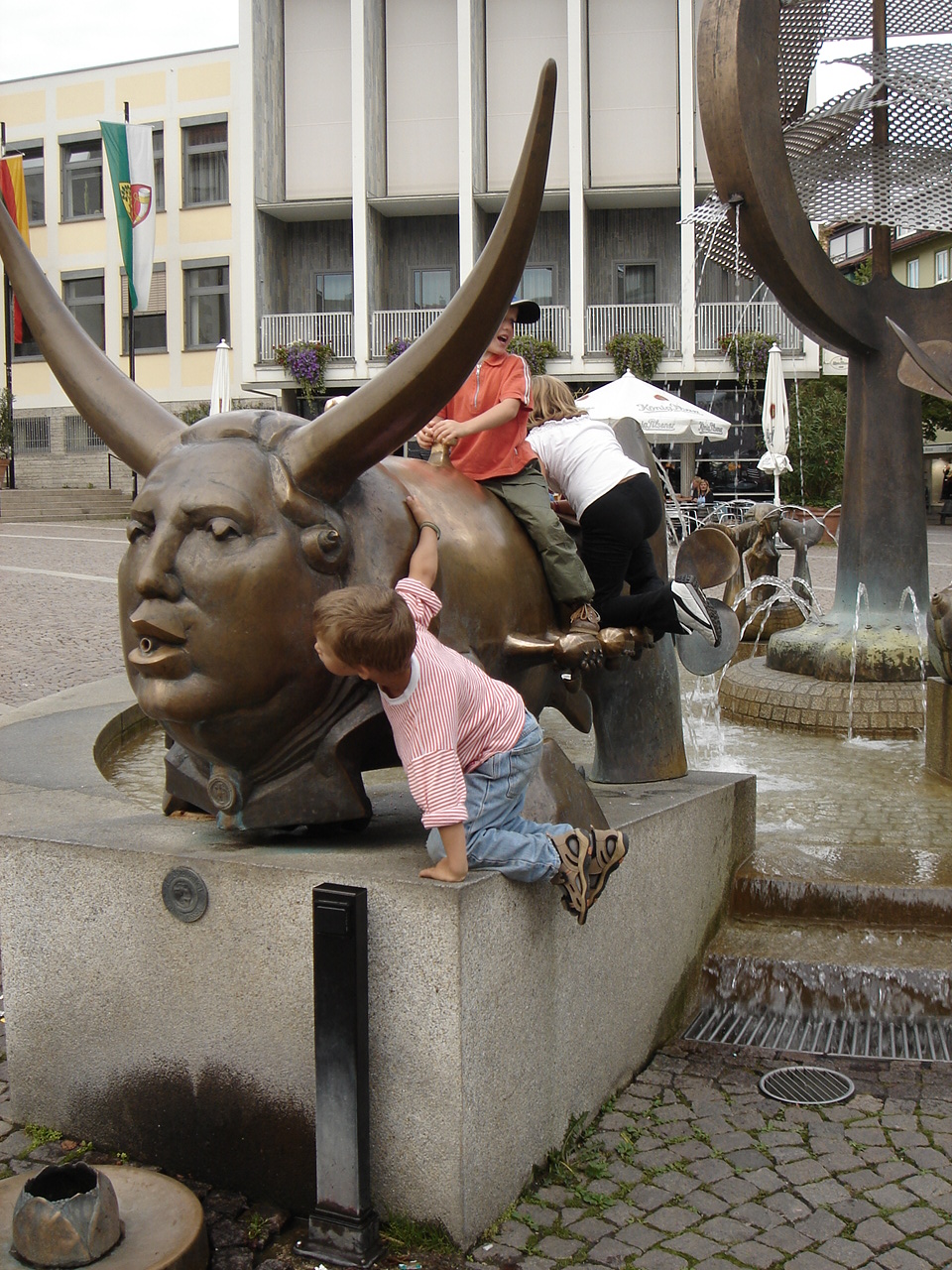
Increasingly Town PlaFrederikshaven water play?nners and Developers are recognising the value of improved public realm. One only has to think of such places as Somerset House, in London or the route between Sheffield Station and City Square, where in both instances programmed fountains have attracted families to play. Another recently created space is Granary Square in Kings Cross. In this instance they are building children’s play into their master planning. The use of programmed fountains in this way is becoming rather ubiquitous and it would be nice to see more water sculptures like that in the Town Centre of Friedrichshafen or better still simple playable features or sculptures.
Interestingly the experience that Sutcliffe Play has had working with Local Authorities to make their public realms more play friendly has resulted in the use of our loose parts system SNUG being utilised, enabling local authorities to introduce play facilities that can be used for public events but have the flexibility to remove it when the space is required for other events such as markets..
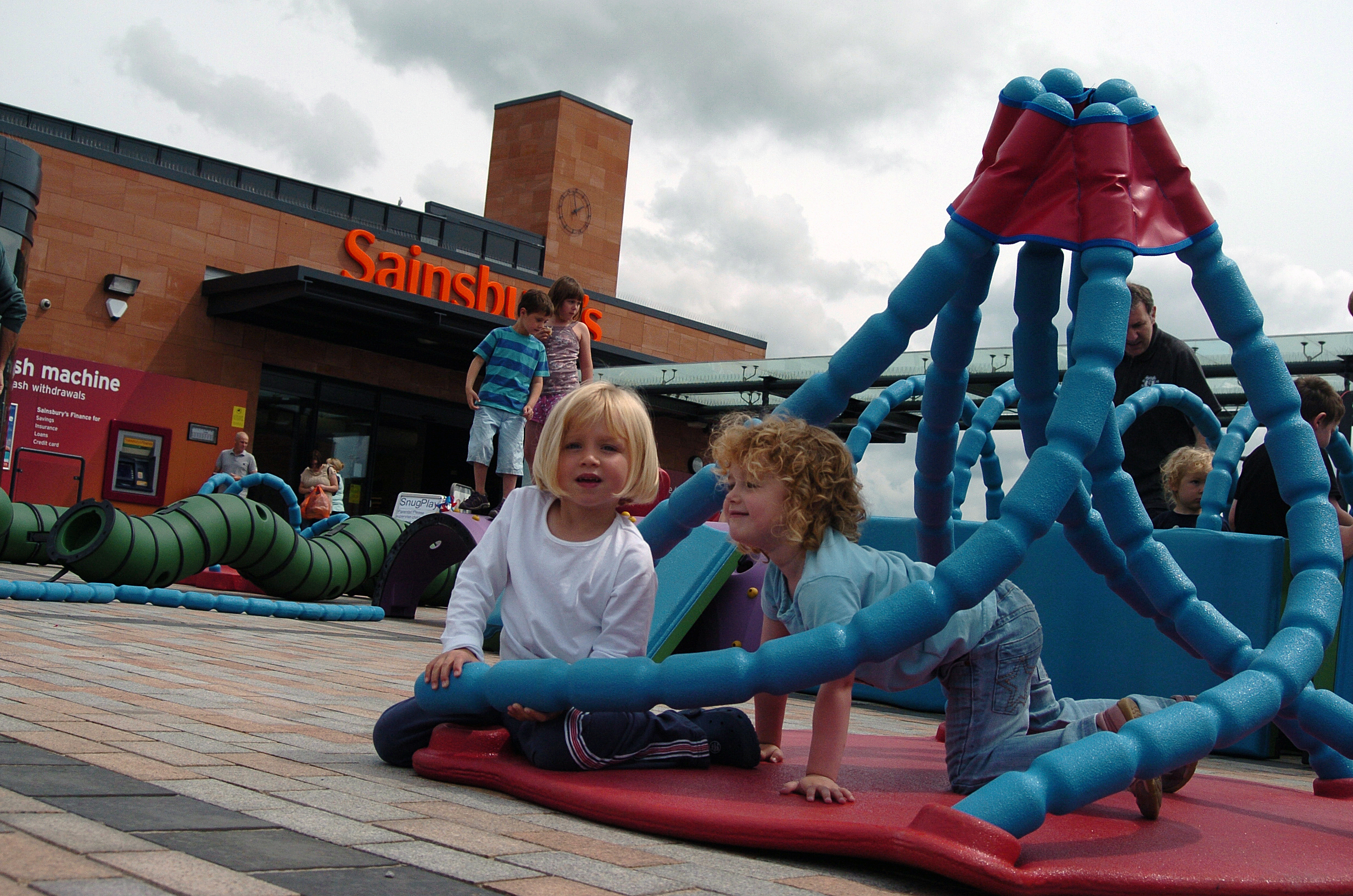
Neston Public Realm

Consultation

Consultation in making the public realm more child friendly is a very powerful tool giving identity, ownership and pride to communities, as well as bringing together groups of disparate and sometimes antagonistic people. Sadly, when abused it merely becomes a way for professionals to abrogate responsibility. Here are three example of successful consultation making a real contribution to the regeneration of communities.

Sarajevo

The first example is from Sarajevo just after the Civil War. It was described to us at a Child in the City Conference in Bruges in 2000 by a Landscape Architect from Canada who led the process. She described how the two communities of Serbs and Croats came together through consultation and involvement for the first time since the war to create this playground. People who had been very close friends before the war and who had become bitter enemies during the war, who at the beginning of the process were unable to speak to each other, slowly rediscovered their friendship. After completion it became the first place of political neutrality, where both communities could meet in safety. It is one of the best examples of how a common interest in children’s play, shared by all humanity, is healing and unifying.

On a much lesser scale, but still important is the need for this sort of unification within all regeneration. In my experience one of the commonest symptoms of the need for regeneration, other than poverty, is a breakdown of social cohesion.

Upton, Yorkshire

Upton village, where Sutcliffe Play is based, is a remote community in the top tenth percentile of deprivation as a result of mine closures in 1965. It divides neatly into the West End, which is the wealthier and generally home to incomers and the East End which is the more traditional mining community.

Groundwork (Wakefield) began by scoping the community structure and created a committee to include representatives of the Parish Council, Groundwork, the Local Authority and Sutcliffe Play. Slowly a plan emerged to develop a play map of the village through consultation with the school, the Youth Centre and by door to door leafleting and canvassing. All of the consultation was led by experienced Playworkers and resulted in maps of where children of different ages played and where their parents had played (usually the same places!), where they felt “safe” and where they felt insecure.

The maps were then used as a basis for playful interventions and playgrounds across the village, which were themselves the subject of further consultation. Teenagers located themselves mainly in the 70 acre wild recreational area of the village, while the younger age groups were nearer to areas of housing.

The project was definitely successful in bringing together the community of Upton and making the village into a more child friendly place. It also developed a strong relationship between our factory and the village. It was a fascinating process, subsequently described in a Groundwork leaflet. Upton Play area
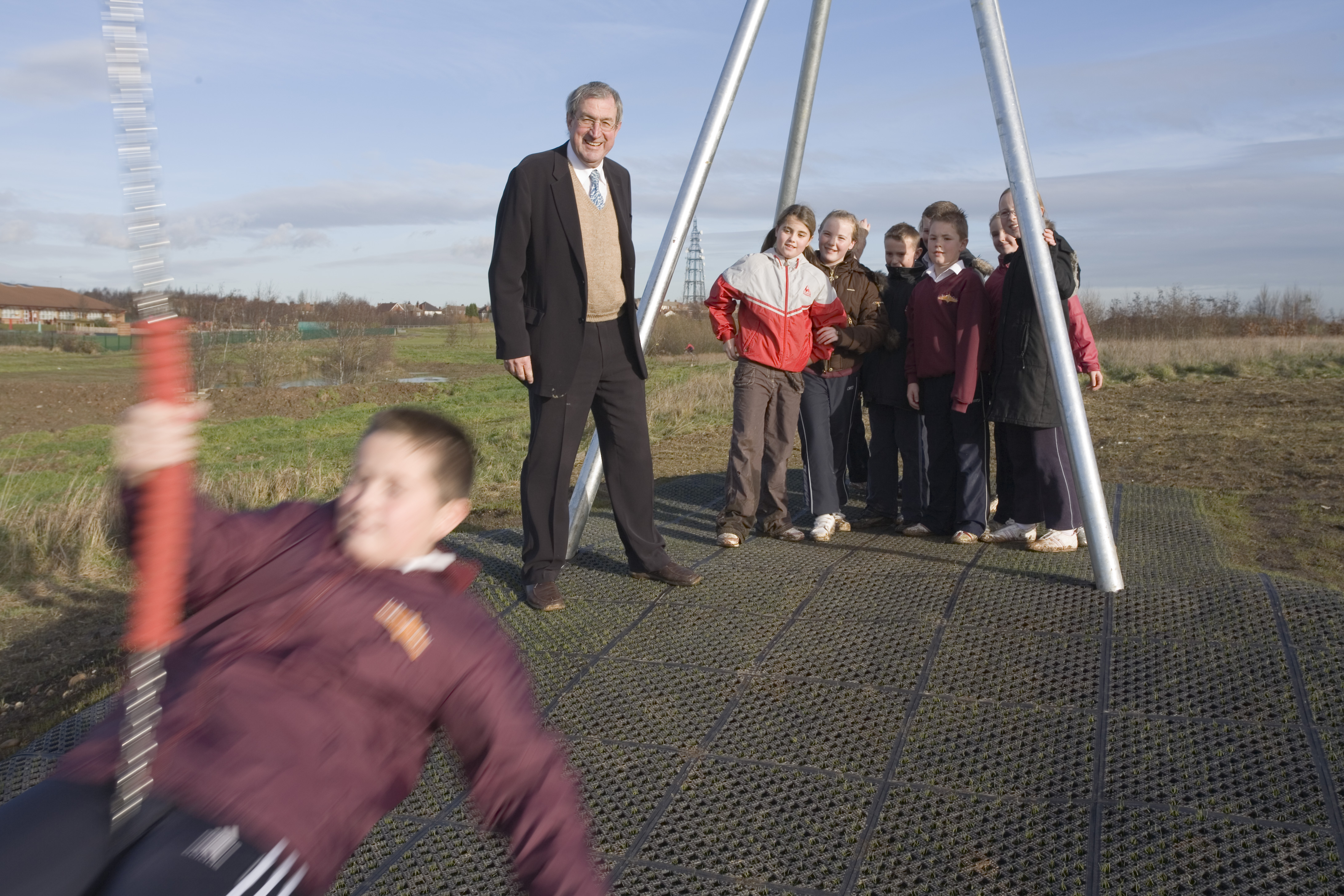
Cutsyke Playforest, Castleford

Cutsyke Playforest was the winning design by Steve Warren of Estelle Warren, Landscape Architects in Leeds of a regeneration competition sponsored by Channel 4 and Wakefield Council as part of a project to involve the media more in the process of regeneration. The brief for the competition was put together by the community of Cutsyke and the winner was selected by the children.

We got involved to help realise the winning scheme, which involved inclined “trees” that were cantilevered from the ground, supporting 4 metres high nets, not an easy task!

However working with the Steve Warren and the community we succeeded in developing a site specific installation that was both playful and iconic. From the perspective of regeneration it has acted as a focus for the community, it has never suffered from vandalism and gives Cutsyke an identity that previously it lacked. It is to Cutsyke what the Angel of the North is to Gateshead! Cuttsyke
So in conclusion there is real evidence that use of children’s play in the public realm, particularly through consultation makes communities cohesive and resilient, but also enhances their quality and pleasure.

Are we focusing on the right issues, I sometimes wonder? 23 childrten died . . .

4 Feb

Youth Justice 2011–12: Twenty-three children died and self-harm soared

Three children died in prison and incidents of self-harm soared by 21 per cent during a terrible year for under-18s in custody, figures released by the Ministry of Justice revealed yesterday. Twenty more children died while being supervised by youth offending teams in the community during the year 2011-12. 


The statistics also show a 17 per cent rise in the number of times restraint was used against children aged 10 to 17 in custody in England and Wales. Children in custody were restrained 8,419 times, which equates to 23 incidents a day. There were 1,725 incidents of self-harm in custody during the year – 33 reports a week.

Quite apart from the children in custody, I was once a Trustree of the Wakefield High security prison play scheme for visiting children and realised how the children of prisoners are perhaps the most discriminated against in society, after the ones in custody and maybe the children of drug abusers. Anyway I wanted to share this headline from the Howard League for Penal Reforem.

Can we act outside our silos?

29 Oct


Six years ago I wrote a piece for Sutcliffe Playback just after the BIG Lottery funding of £155m for England was announced pointing out the dangers of the increased funding causing each of us to fight for our share rather than ensure a fair distribution, shared according to a mutually accepted rationale.


In retrospect I think we did a remarkably good job in containing our frustrations and allowing a diversity of funding that has enhanced the whole of the play sector to the benefit of children across England. Quite apart from producing the Design Guide and Managing Risk in Play Provision: implementation guide, both of which I think were globally cutting edge. Add to this the developing awareness of the importance of play in the other three nations and we have a golden age!


Little did I think that six years later I would be returning to the same theme in completely different circumstances. Normally one might expect that adversity would bring factions of a sector together to speak with one strengthened voice, but, sadly, in the field of play I feel that we are in danger of hunkering down into our old default bunkers and struggling over the scraps that fall from the political table.


Of course a lot has happened over the past six years and perhaps in this context the most significant development has been the strengthening of devolution to the four individual nations, each with devolved responsibility for play. But that is not the only influence that might have affedcted attitudes today. Another is a reaction to the wealth and authority that flowed into and from Play England during those years. The problem here was that the workload created by this wealth isolated them at times from the rest of the field. This was not helped, in my view, by what some felt was the coercive and arrogant way in which they exercised their influence; the sector, now free from that influence, have in places reacted by returning to default and for me none of this benefits the children we aspire to serve.


For example I have noticed that we are sadly building more and more playgrounds with fences and rubber carpets. And then there is the anti-standards lobby, or am I misreading this? I was at a meeting the other day when Playlink and the Play Safety Forum were spoken of antagonistically as one body!


Add to this the differences between the four Nations. I have my concerns here as well. A couple of years ago there was undoubtedly considerable antagonism between Play England and the other three and I personally have always had a sense that Play England have been reluctant partners in the Children’s Play Policy Forum. When they were rich and powerful acting with a sympathetic government, this did not matter, but now it does. They are all at different places with their own internal politics and no doubt England has the least sympathetic Government with which to deal.


The Association of Play Industries is another interesting case in point. They have financially supported the Children’s Play Information Service for the past year and are currently being requested to give support into the future, but the tensions continue between them and the more idealistic end of the sector, yet both depend on each other. Together they could be so much more than apart, but are we listening to each other? Or lecturing?

So, enough examples (and I could go on), what is to be done?


Essentially I suppose what we have to do is to talk to each other and listen and we have to do this honestly and try to do it without prejudice. The manifestations of play are many and varied, there are places and values for all of them, just as there are for all the different sources and providers. Surely from a child’s perspective the more varied and alternative the opportunities, the richer and valuable will be their childhood.


I sympathise with the wish to develop more opportunities for children to play in nature, with greater opportunities to take and manage risk and with the wonderful experiences offered by playworkers and adventure playgrounds. Would we have developed and invested in Snug if this was not the case? This is important to me personally, all these things are pushing the boundaries, the place I love to be, but we must also respect the need and value of the conventional places as well.


So I believe we must talk, listen and respect, perhaps even sympathise with each other.  And perhaps one place to begin would be the Children’s Play Policy Forum (CPPF) and just to show how old I am I will now give a little history lesson (press delete here!! Or just skip the next paragraph!) as I think it is relevant to today’s situation and some of you will n ot have been in the sector in the days when the CPPF was formed.


The Forum was established by Fields in Trust (then the National Play Playing Fields Association so no wonder it was treated with suspicion by some), following a report by George Torkildsen, which they had commissioned. It was set up with representative of all the National Agencies and organisations with an interest in play. The CPPF then started to engage with the then Conservative Government, who had previously wound up the National Children’s Play and Recreation Unit and no policy for play or funding. The result of these conversations was the creation of the four Contracts for Policy, Information, Safety and Training, which were inherited by the incoming Labour Government. It was then through the CPPF that a conversation developed with Chris Smith, which resulted in the publication of Best Play by the NPFA as a partnership project with the Children’s Play Council (CPC) and Playlink (which at that time was a charity advising adventure playgrounds) setting out the reasons why play was so important. This in turn led to the famous promise from Chris Smith of £200 million for play. Tim Gill, Director of CPC, was seconded to the Department of the Deputy Prime Minister to write their policy document on play suggesting how this money should be spent. CPC by this time were also responsible for the three of the four contracts. As this progressed and dialogue with Government increased, the need for the CPPF decreased, becoming simply a talking shop to keep each other up to date and compare notes.


However, in the current political environment I think the role of the CPPF has once again become vital to engage once more and speak for the sector with Government. To do this the sector as a whole across the UK must identify the issues that are common to all, the objectives that are shared so that we can be seen to be speaking in harmony and not in discord. The objectives for children must be very similar, although the way these are played out within the sector will be different, both geographically and functionally.


Having identified them we must agree strategically on the actions we will all take, together and separately to achieve them. This is an ambitious proposal, but all the better for that. To achieve it we really must speak, listen, respect and sympathise with each other and then agree on the appropriate way to engage with the relevant bodies to persuade them of our cause. It is more important now than it was six year ago when I wrote my last little plea. The Sector is suffering and with it our children, our society and our future.

Image

Benefits and risks balanced?

3 Sep

Benefits and risks balanced?

Balancing Benefits with Risk

3 Sep

CHILDREN’S PLAY AND LEISURE: PROMOTING A BALANCED APPROACH


Today the HSE Has published a high level statement developed jointly with the Play Safety Forum promoting a more balanced approach to assessing risks in play: Children’s play and leisure: promoting a balanced approach


Essentially, whilst not relieving anybody of their responsibility for sensible care, the statement endorses the approach of balancing the benefits of an activity against the risks inherent in that activity (Risk Benefit Assessment or RBA). This is the approach advocated by the play safety forum (PSF) for the past four years.


Personally I do believe that this is a landmark publication. As I said in my comment on Tim Gill’s Rethinking Childhood blog It’s health and safety gone sane! My passion has always been working on the edge of convention. This is where invention and originality thrive. This is where we develop and create the future, but this is also where existing norms cannot be applied. Norms by their very nature are based on the known and experienced and of course this does not just apply to Play but to all creative activities such as Art, Sport and, for that matter, Science.


The reason that RBA is so important is that it creates a process that allows us to overcome those barriers that naturally inhibit change, be they prejudice, legal or commercial. Few people embrace change and uncertainty, but with such barriers in place society and in our case play cannot develop. So for me RBA is the route to the future. The optimist in me believes a better, more creative and exciting future. What more could one ask?

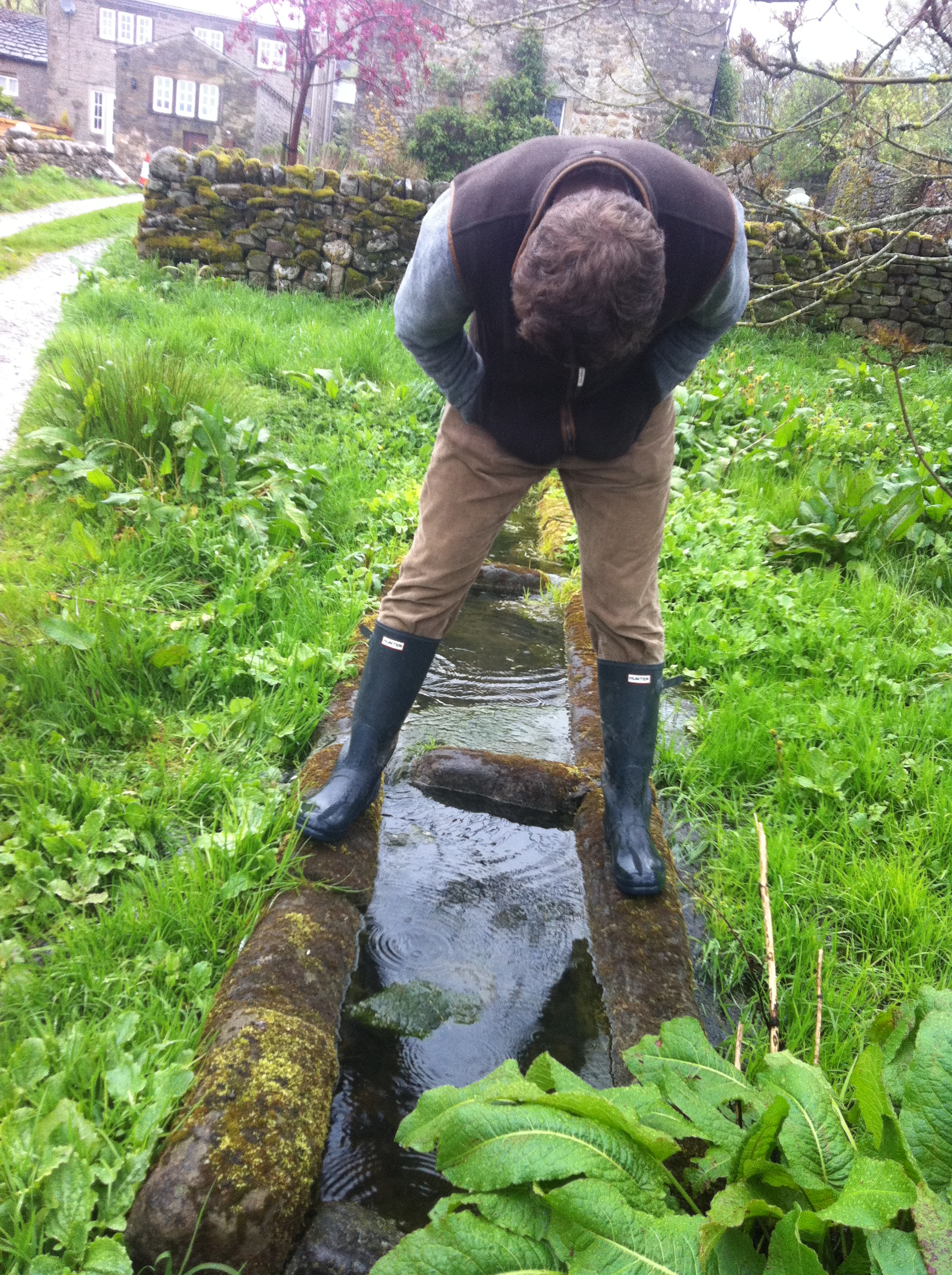
My favourite place to play, Appletreewick troughs

2 Jul


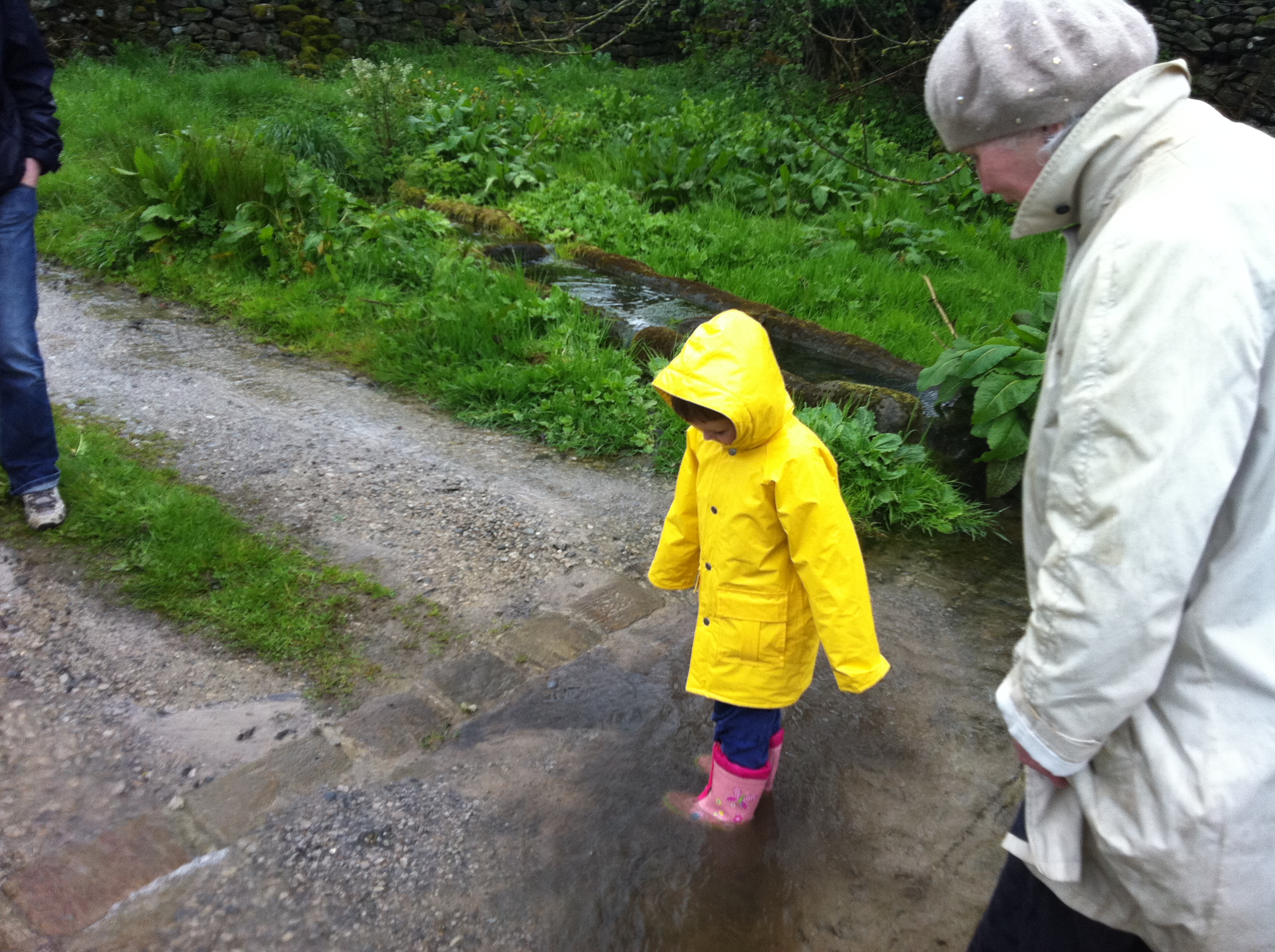
You will all have played the game of remembering where your favourite place to play was, well here is mine. Three water troughs in line adjacent to a wild cress bed from whence a tiny stream ran down to the 10 acre (remember those?) field, big by Dales standards and out of bounds to me. I was five.


I was fascinated when I returned recently with my cousin’s daughter, how she just headed in the same direction and did the same things; somehow reassuring! Even more so when her uncle arrived and jumped up on top of their slippery edges! I used to go down the lane next to our house in Appletreewick (well what a name?) and head for the troughs and stream pouring out of the wild cress bed. We spent hours damn building, kicking the water and filling a jam jar. Little water creatures, snails, shrimps, larva, boatman all were there.

We only had the cottage from when I was four to eight years old, cold and damp, logs that wouldn’t light, high windows that I couldn’t see out of. My Cousins used to visit us and about fourteen of us used to play Kick Can. We had freedom, we could play anywhere in the village and down by the river Wharfe. My Aunt knitted me a jumper of brightly coloured patches so that I could be seen from far away. The Wharfe was dangerous, it ran deep and strong in places, but in others it was benign with places to swim and slide.


Despite this idyll of nature in childhood I would not want this blog to be seen as an endorsement of NDD (Nature Deficit Disorder), wonderful though the natural environment is, I still feel irritated by the NDD syndrome of having to label children by their disabilities. There are many advantages of living in cities and more important issues that we need to tackle, the most important of which is probably the lack of freedom that we now give to our children. I believe that we as a sector need to be overcoming fear, fear of traffic, fear of strangers. We ought to be concentrating on supporting parents and politicians and tackling the media on these issues, rather than dissipating our energies on a range of lesser ones, which are in danger of distracting, like Jubilee and Olympics from the real more fundamental issues we must address!

Bauhaus Play

30 May

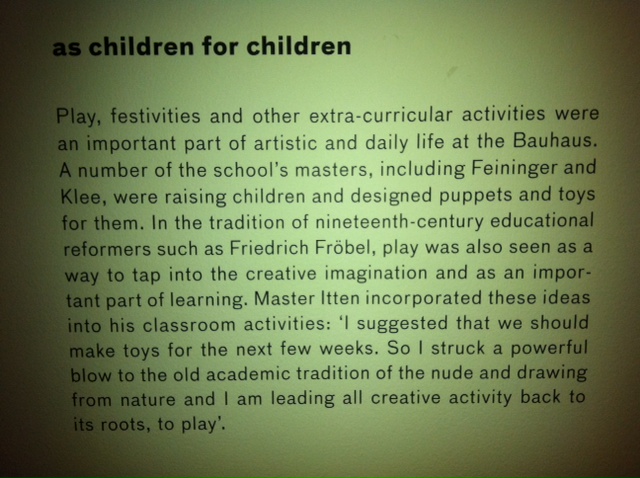
I visited the Bauhaus exhibition at the Barbican yesterday and came accross this wonderful piece of interpretation. I couldn’t resist sharing it!Image

Every one responsible for public realm should be concerned about Warwick Castle Health and safety conviction and fine of £350,000

24 May

Every officer responsible for public activities and events must have felt a shiver down the spine when they heard of the criminal conviction of the Warwick Castle Operators, Merlin Attractions and the fine of £350,000, particularly those responsible for parks and places where children play. I believe it is precisely the message that the past and present Governments, the Health and Safety Executive and the Play Safety Forum have been trying to reverse over the past 10 years and I sincerely hope that Merlin Attractions will appeal the decision.

I write in a personal capacity, but I am currently the Chair of the UK Play Safety Forum, Vice Chair of Play England and Chair of Sutcliffe Play, having spent the last twenty years working in the field of standardisation and risk management. I am not going to try and summarise the case but give the link below to the article that forms the basis of this response:

 http://www.dailymail.co.uk/news/article-2135064/Warwick-Castle-fined-350-000-pensioner-plunged-15ft-death-parapet-dry-moat.html?ito=feeds-newsxml

Let me start by saying that there can be no question about the tragic nature of the accident and the resulting death, which will cause much grief to his family and friends, with whom we will all want to share our sympathy, but, despite this, the question must arise about the extent that such a tragedy can inhibit and reduce the activities of society as a whole.

As stated above, perhaps the most important reason for concern is that this verdict seems to fly in the face of all that the H&SE and the Government are saying about common sense, myth busting and proportionality and particularly the spirit of the Lord Young report. To us in play this is very important as it undermines our commitment to encouraging practitioners to be braver in what they offer children particularly as the Judge said that it was not so much adults, but children for whom he was concerned.

Since Merlin took over responsibility for the Castle in 1978 more than 20 million people had passed over this bridge. Prior to that the bridge had been used for hundreds of years without incident, if this activity has to be risk assessed, where does that process end?

A particular point of interest in this case is that it was not Officers of the HSE but the H&SE officers of the relevant local authority that brought this action, confirming perhaps the wisdom of returning responsibility for prosecution back to the HSE itself. 

But it is not the damage done in this specific case to the assessing of parapet walls we are to be concerned about, it is every decision affecting the public, both adult and children in any form of recreation where an authority could be held responsible for their safety. It will encourage and spread the sort of caution that has inhibited Local Authority Officers and other organisations like the National Trust and English Heritage from giving us unfettered freedom to walk, climb, play and explore or to be responsible for ourselves and our own safety.

It is for this reason that I think it is very important for all of us that Merlin appeal this decision and I hope that all those in a position of influence will encourage them.

Hello world!

26 Apr

Welcome to WordPress.com. After you read this, you should delete and write your own post, with a new title above. Or hit Add New on the left (of the admin dashboard) to start a fresh post.

Here are some suggestions for your first post.

  1. You can find new ideas for what to blog about by reading the Daily Post.
  2. Add PressThis to your browser. It creates a new blog post for you about any interesting  page you read on the web.
  3. Make some changes to this page, and then hit preview on the right. You can always preview any post or edit it before you share it to the world.